
Composition of the Commission and its Mandate
The Treaty of Rapallo of November 1920 outlined only a general boundary line — its precise demarcation on the ground required extensive joint work. Under Article 5 of the treaty, the two kingdoms established the Mixed Delimitation Commission (Commissione Italo–S.H.S. per la delimitazione dei confini). Between 1921 and 1925 the commission mapped and staked out the entire land border from Peč to the Adriatic — 69 sectors in all, with boundary stones. In cases of disputed sections, the Swiss federal authority acted as arbitrator, as the treaty explicitly provided.
Because the Rapallo border encompassed several distinct territorial questions, the treaty divided the commission into three equal sub-committees: one for the land border between the Julian March and the Kingdom of Serbs, Croats and Slovenes, one for the border of the Free State of Rijeka (Reka), and one for Dalmatian issues. All three operated according to the same technical procedure, though the Julian March commission was by far the largest.
The commission employed a total of 293 persons. Its headquarters were at the Palazzo Artelli in Trieste (Trst) (today Via dell’Università 5). The Italian side maintained field offices in Kobarid, Gorizia (Gorica), Pivka and Opatija; the Yugoslav side in Ljubljana. Work was carried out by three working groups that alternately managed seven field teams. Each team consisted of a surveyor, an assistant and two rod-men; in addition there were a team leader, a stonemason, construction workers, drivers and a cook.
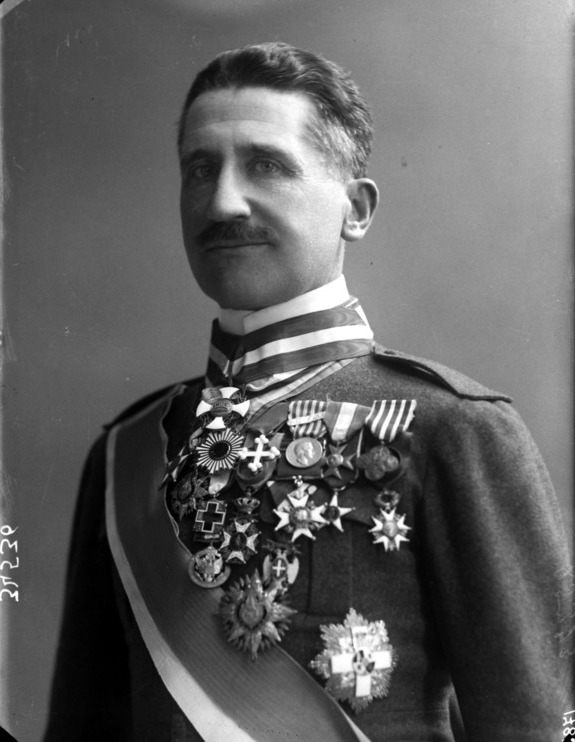
The commission had six members — three from each side. It was co-chaired alternately by Senator Francesco Salata for Italy and General Rudolf Maister for the Kingdom of Serbs, Croats and Slovenes.
The Yugoslav delegation saw several changes: Colonel-General Milan Ječmenović was replaced by Colonel Viktor Andrejka, who also left the commission before its conclusion; General Maister was replaced after his forced retirement by Colonel Daskalović, who was subsequently — under Italian pressure — replaced by Colonel Panto Droškić. On the Italian side only one change took place: Salata was replaced by General Vacchelli; the third permanent member was Colonel-General Italo Gariboldi.
Of the six members, only two lived to see the abolition of the Rapallo border at the Paris Peace Conference of 1947. All titles are those held during the commission's active period.



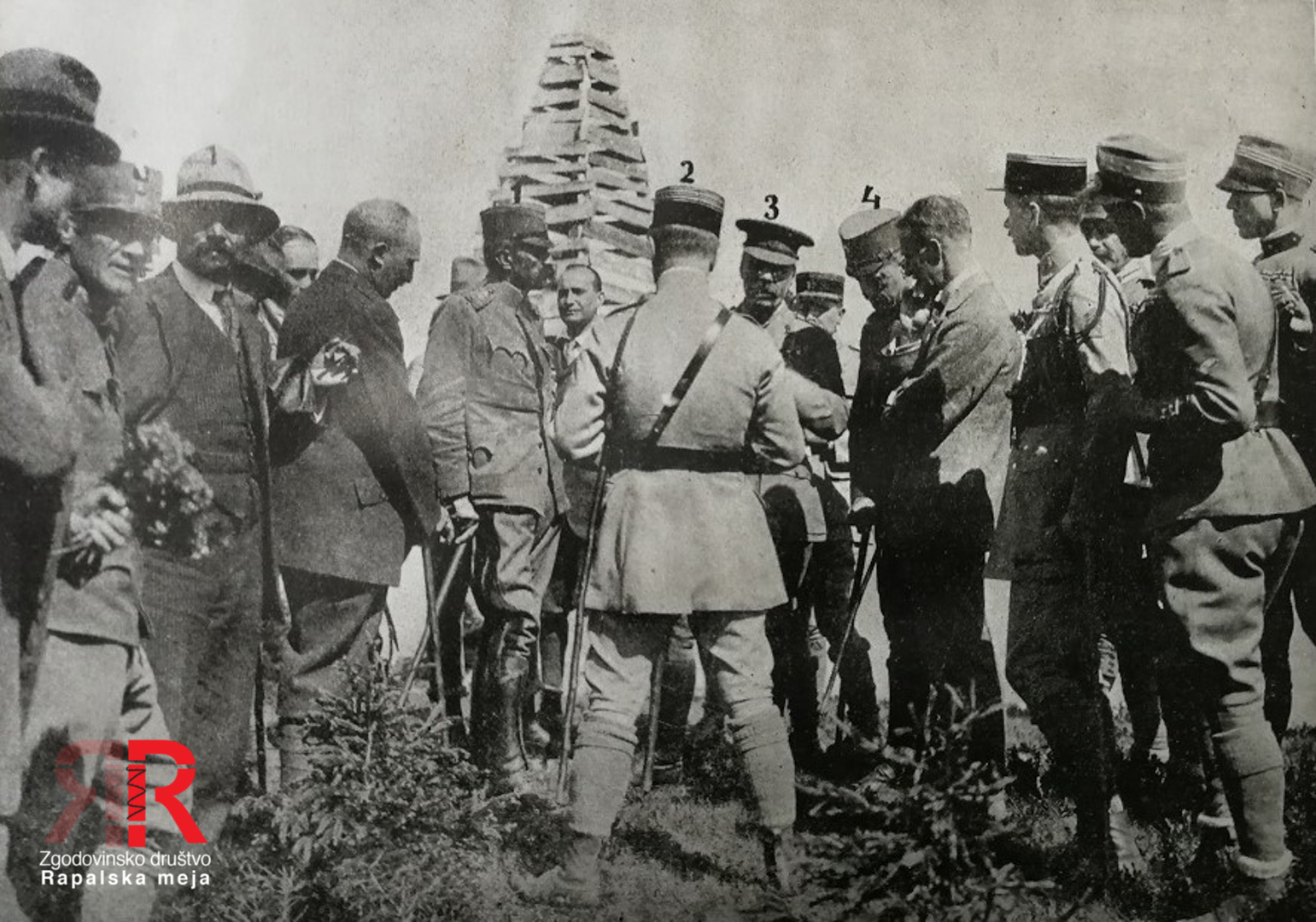

The Commission's Arrival in Ljubljana
The commission held its first session in February 1921 in Ljubljana. Both delegations were accommodated at the Grand Hotel Union — at the time one of the most prestigious hotels in the city. The Slovenian and Yugoslav press followed events closely; selected newspaper reports from those days are reproduced below.
Slovenec · 23 February 1921
The members of the Yugoslav delegation to the delimitation commission, which will determine the border between Yugoslavia and Italy, are due to arrive in Ljubljana today according to current arrangements: Colonel-General Milan Ječmenić and Infantry Colonel Aleksander Daskalovič are expected in the afternoon, while General Maister is to arrive in the evening. The members of the Italian delegation, General Vacchelli and Colonel Garibaldi, departed from Rome yesterday evening and will most likely arrive in Ljubljana tomorrow morning on the Orient Express. The chairman of the Italian delegation, Senator Salata, has sent telegraphic greetings to the Yugoslav members of the delimitation commission, expressing regret that owing to his wife's illness he will be unable to attend the first session.
Nova Pravda · 26 February 1921
The members of the delimitation commission between Italy and Yugoslavia arrived in Ljubljana on 22 February. All are accommodated in apartments at the Hotel Union.
The Yugoslav delegation members, Colonel-General Milan Ječmenić and Infantry Colonel Aleksander Daskalović, arrived first. At five o'clock in the afternoon the Italian delegation members, General Vacchelli and Colonel Garibaldi, arrived at the main station on the Trieste train. They were met at the station by Italian delegate de Comelli. General Maister arrived in Ljubljana at ten o'clock in the evening on the Zagreb train.
Jutro · 22 February 1921 — telegram from Belgrade
Envoy Antonijević has brought the Treaty of Rapallo from Rome, where it was exchanged. The Mixed Commission for demarcation with Italy will convene this week in Ljubljana and begin the demarcation between our kingdom and Italy.

The Commission Begins Its Work
Immediately upon arrival, the commission took its first decisions. Sections of the border that had already been clearly defined by the Treaty of Rapallo — the islands of Krk and Rab and the Logatec territory — were handed over without delay. Dalmatian questions were handled by separate delegations.
Jutro · 25 February 1921
Reports from Ljubljana state that the delimitation commission has begun its work without obstruction. It has been decided so far that the islands of Krk and Rab are to be handed over to our authorities this week.
Tomorrow the commission for determining the border in Dalmatia will travel to Split. The delegates of this commission are: Colonel Milojević, Njezić and frigate captain N. Stanković.
Handover of Logatec, Planina and Rakek
At the session of 25 February 1921, the commission signed the protocol on the transfer of the Logatec territory — the first Slovenian territory that Italy returned under the Treaty of Rapallo. The following day, 26 February, a special train carrying the delegation, military personnel and civilian authorities departed from Ljubljana. The handover proceeded in a pre-arranged order: formal military honours, transfer of administration and the symbolic lowering of Italian flags.

Two newspapers described the events of that day in detail. The two accounts complement each other — Jutro focuses on the atmosphere and the crowds, while Slovenec covers the official ceremonial aspect of the handover.
Jutro · 27 February 1921

When the Yugoslav-Italian delimitation commission convened in Ljubljana, it was agreed that Italy would immediately evacuate the localities awarded to our state under the Treaty of Rapallo. Today these localities were transferred to our administration. At half past eight in the morning a special train, beautifully adorned with greenery and small flags and bearing the inscription "First train to liberated territory" on the locomotive, departed from Ljubljana main station.
On board were General Maister and other members of both delegations of the delimitation commission, many other public officials, and two bands: the divisional band and the railway band. The station was packed with the public, who enthusiastically greeted the first train to the liberated Logatec territory. "Give our regards to our brothers!"
At Verd station a company of the 40th Infantry Regiment — all sturdy men from Valjevo — boarded the train, while at the existing demarcation line the gendarmerie and customs guards came aboard.

Logatec was decked entirely in flags. Even the station building, from which both a Yugoslav and an Italian flag still flew. The station was full of people carrying tricolours, with Sokol members and the fire brigade. A splendid impression was made by the many girls in national costumes and the schoolchildren with their small flags. All these people greeted the arrival of the train with indescribable enthusiasm, hats were raised, flags waved, and the cheers for Yugoslavia seemed without end.
General Maister received the report of the commander of the Italian detachment drawn up before the train, after which "Our Beautiful Homeland" rang out from the throats of the girls in national costumes.
Punčuh, mayor of Upper Logatec, addressed the representative of the Yugoslav state, General Maister, in fine words in the name of the liberated people, and concluded his speech with a cheer for Yugoslavia, King Peter and Crown Prince-Regent Aleksandar. The military band struck up the national anthem, after which the Italian general received the report of the commander of the Yugoslav company that had arrived by train.
The handover of Logatec and the procession. Both companies then fell in opposite each other, exchanged mutual honours — and the Italians marched away. Our company then assumed duty, just as our railway staff immediately took over the management of the station. The provincial government was represented by Court Councillor Mr Vremenšek, who immediately installed civil administration over the liberated territory. A long procession of girls in national costumes, schoolchildren, Sokol members, firemen and a great number of people formed through Logatec, with both bands from Ljubljana playing, girls singing patriotic songs, cannon firing at the church, and the endless procession moving through Logatec, where not a single building was without a flag. Everyone's eyes shone with enthusiasm; all joyfully greeted the long-awaited freedom. On the district headquarters building hung the Italian flag; the people gathered beneath it and sang the national anthem. After a rousing address by Mr Punčuh the military band played the Yugoslav anthem and the Italian flag disappeared for ever.
The train continued through Planina to Rakek. At both stations crowds of people, societies and schoolchildren. The reception equally as warm as in Logatec, joy and contentment shining from all eyes, flags flying, hymns resounding — the people celebrating their great day of liberation. Tears of emotion and happiness streamed from many eyes. At Rakek there were especially many old men expressing their joy at having lived to see the day of freedom.
Throughout the liberated territory flags flew from virtually every house, without exception. Everywhere Italian uniforms were still to be seen, but everywhere our gendarmes and customs guards were already on duty. No one caused harm or said a harsh word to the remaining Italian uniformed personnel — thus our people earned a fine testimonial to their high level of culture.
At Logatec station the locals were tearing off various Italian posters. A young Serb from the Valjevo area stood guard and was afraid the people might damage the building. He approached the nearest person and said amicably: "Nemoj, brate, da razbijaš, ovo će nama trebati. Skini lepo ove talijanske cedulje, a kuću ostavi na miru." [Don't break things, brother, we'll need them. Peel off those Italian notices nicely, and leave the building in peace.] The Italian soldiers were certainly not so friendly with the people!
On the return journey from Rakek the special train again stopped in Logatec, and at the hotel "Kramar" a banquet was held, while outside the hotel the band of the Drava Division played Yugoslav national melodies. At five o'clock in the afternoon the train began to move amid lively cheering from the assembled public for the homeland, the sovereign and the army — towards Ljubljana.
Even the Italians witnessed all the enthusiasm of our people, now freed from their yoke. Let the Italians take heed of how they treat the people who under the Treaty of Rapallo have been assigned to Italy.
Slovenec · 27 February 1921

"First journey to liberated territory! Long live our liberated brothers!" This was the inscription carried by the richly decorated locomotive, adorned with spruce greenery, which today at half past eight in the morning pulled a special train from Ljubljana to Logatec and then onward to Rakek. This special train was designated for representatives of all the authorities that were to take over from the Italians the occupied territory and the railway as far as Rakek under the Treaty of Rapallo. At the main station in Ljubljana all the relevant official bodies had gathered, who then carried out the transfer of railway, political and customs administration. Among others, we note the following individuals: General Maister as chairman of the Yugoslav delimitation commission with his members, Colonel-General Milan Ječmenić and Infantry Colonel Aleksander Daskalovič. For the Italian delegation: General Vacchelli. Furthermore, a considerable number of Yugoslav senior and junior officers of the Ljubljana garrison. The provincial government was represented by Court Councillor Kremenšek. As the Southern Railway was most directly concerned in the handover with regard to public traffic, numerous representatives of the operating directorate travelled on this special train, among whom we note: director Ing. Šego, central inspectors Dr Fatur, Eng. Schneller, Engineer Ogrinc and Al. Pregelj, further senior inspectors Josip Goštiša and Fran Vidic. The customs administration was represented at the handover by Chief Inspector Jovanović.
Solemn reception in Logatec. The population of the occupied Logatec district had already sensed several days earlier that the Italians would soon leave the Logatec forests. By Thursday the patriotic inhabitants of Logatec were already preparing Yugoslav national flags. The Italian commissariat strictly prohibited this — but they did not comply. While the Italians confiscated some flags, when the delimitation commission with General Maister appeared in Logatec on Friday morning, the furious Carabinieri had to return them to their owners. The news immediately spread that on Saturday at ten o'clock in the morning the official transfer of the localities to Yugoslav authority would take place. The common people waited impatiently for the moment when Italian rule would end.
Shortly after ten o'clock the richly decorated special train pulled into Logatec station. At the station a large crowd had gathered: small schoolchildren with flags, robust and patriotic girls in national costumes, firemen, Orel and Sokol members and other cultural societies. The train halted. The Carabinieri and Alpini stood in a line. There was a brief salute to General Vacchelli and our representatives. Then the mayor of Upper Logatec, headteacher Punčuh, delivered an address, followed by Miss Serini, Miss Hodnik, Pečkaj for Orel and Smole for Sokol. Following the official addresses came the mutual salute of the companies — our tall men from Valjevo facing the small Italian Bersaglieri and Carabinieri. Our railway staff immediately began to take over their duties. Within minutes there was already a Yugoslav ticket clerk at the counter, issuing tickets for Yugoslavia and beyond.
The demonstration through Logatec concluded entirely peacefully. The common people showed their "highly cultured neighbours" that they knew how to appreciate their political and civic standing.
Italian flags disappear! Representatives of our civil and military authorities immediately took over the office at the station. Immediately the only valid currency for tickets was — the dinar. There was lively trading in the square. Lire began to fall in value. An interesting moment came when the Italians took down their red-white-green flags before the military command and General Maister took command in the name of Yugoslav authority. From the "presidium" the Italian flag immediately disappeared after the takeover and our state flag unfurled. Italian soldiers paid honours to our general. Gradually through the day Italian flags disappeared from all official buildings.
After sincere and enthusiastic ovations the special train after twelve o'clock continued toward Planina and Rakek. At Planina the special train received an unexpectedly fine reception: the Italian military garrison stood in formation and paid honours to our representatives. The Italian stationmaster handed the station over to our railway staff. As soon as the handover was complete, the Italian flag disappeared — the people greeted this joyfully.
Ten minutes before one o'clock in the afternoon the special train arrived at Rakek. While Logatec had been dominated mainly by women and young people, at this last Yugoslav station it was almost entirely mature, stalwart men who had gathered. They greeted the arriving representatives with great enthusiasm. The mayor of Rakek municipality, Jože Steržaj, addressed General Maister and Court Councillor Kremenšek. Addresses were also delivered by the Cerknica dean Mr Juvanc, judicial councillor Dr Matija Lavrenčič and the commander of the fire brigade from Unec, Mršek.
A magnificent procession then formed, with both bands and the Logatec Orel and Sokol members marching through Rakek. Meanwhile the Yugoslav authorities took over duties from the Italians. The special train, which departed back toward Logatec at two o'clock in the afternoon, was already dispatched by a Yugoslav official. The Italian name "Recchio" on the Rakek station building had already disappeared before the departure.
Even more beautiful than the arrival was the departure from Rakek. Farm lads sang a few fine Slovenian songs in front of the salon carriage of the special train. Amid thunderous cries of "Long live Yugoslavia!" the train departed back toward Planina. In Logatec the Italian inscription "Longatico" had meanwhile already disappeared, the Italian flag had gone, and the "bar della stazione" was closed and guarded by soldiers — to preserve peace and order and fittingly celebrate the solemn day of the reunion of brothers who had been separated for two and a half years.
Amid stormy cheers from the locals, the train began to move from Logatec station toward Verd.
Progress of the Commission's Work (1921–1926)
The commission first convened on 23 February 1921 in Ljubljana, where it was formally constituted. The entire work was carried out in several phases between 1921 and 1926.
Three Field Sections
To facilitate the management and supervision of work, the border line was divided into three field sections. Each delegation deployed its topographers across the sections; the Yugoslav side gathered all personnel in one place and assigned them as needed.
From Peč (tri-border point) to Porezen
Leader (IT): Lieutenant-Colonel Tessitore
HQ (IT): Kobarid
HQ (SHS): Ljubljana
From Porezen to the Postojna–Logatec road
Leader (IT): Lieutenant-Colonel Rovere
HQ (IT): Gorizia (Gorica)
HQ (SHS): Ljubljana
From the Postojna–Logatec road to the junction with the Rijeka commission
Leader (IT): Lieutenant-Colonel Martorelli
HQ (IT): Ilirska Bistrica
HQ (SHS): Ljubljana
The technical advisors were: for the Italian delegation, topographer Grupelli of the Military Geographic Institute in Florence; for the Yugoslav delegation, Lieutenant-Colonel Marković.
Disputed Sections
On some sections the delegations were unable to reach a common interpretation of the treaty text. Disputes arose in two forms: divergences in interpreting the treaty when working with maps, and divergences in transferring the agreed line to the ground.
a) Sections on which no agreement was reached at Venice:
b) Divergences arising in transferring the line to the ground:
Boundary Markers: Method and Numbers
For the physical demarcation of the border on the ground, the commission adopted a uniform system of reinforced concrete boundary stones fixed directly to bedrock, so that displacement or destruction without visible trace would be virtually impossible. Three types were distinguished by function:
- Principal boundary markers — placed at the most important border points and at prominent locations; they serve as the axes of the entire line.
- Intermediate boundary markers — between the principal markers, to define the precise course of the border in detail.
- Special boundary markers — placed where the border crosses major thoroughfares; visually more prominent than the others. A total of 38 such markers were placed.
At the junction with the Austrian border at Peč stands a tri-border marker placed by the Italian-Austrian commission; it is built of stone. The numbering of the principal markers runs from north to south using Arabic numerals. Intermediate markers are numbered with Roman numerals in series between successive principal markers, so that each intermediate marker is identified by two numbers: an Arabic numeral (the preceding principal marker) and a Roman numeral (the sequential number within the series).
Carved on each boundary marker are: on the faces turned toward the respective territory, the designation I (Italy) or SHS; below the sequential number, the year of the treaty 1920; on the top surface, three incised straight lines — one indicating magnetic north, and two indicating the directions to the neighbouring markers.
For each boundary marker a complete documentation file was prepared: a descriptive monograph with the precise course of the border to the next marker, a panoramic photograph, three reference points cut into the surrounding rock (marked A, B, C), a sketch at a scale of 1:200, and the measured azimuth to the neighbouring markers. The terrain along the entire border was surveyed at a scale of 1:5,000. All data were entered in a joint final register, confirmed by topographers of both delegations and the supervising technician. The original documentation was drawn up in Italian and translated into the language of the Kingdom of Serbs, Croats and Slovenes.
Sources and Bibliography
- Commissione Italo–S.H.S. per la delimitazione dei confini. Storia della commissione e metodo del lavoro. Unpublished official report document. [Source: Storia 115–169]
- Schein, V. 2021. Kako smo risali Rapalsko mejo tudi s pomočjo šestila in trikotnika. Slivniški pogledi, Cerknica. ↗ PDF
- Žorž, G. 2017. Varovanje rapalske meje in vojaška navzočnost na območju XI. Armadnega zbora. Master's thesis. Ljubljana: Faculty of Arts, Department of Geography. ↗ UL Repository
- Žorž, G. 2022. Geodetska izmera rapalske meje, njena digitalizacija in presek s historičnim in aktualnim stanjem zemljiškega katastra. In: GIS v Sloveniji 16: Preteklost in prihodnost. Ljubljana: Založba ZRC, pp. 259–267. ↗ DOI
- Sossou, V. 2021. Rapalska meja in razmejitvena komisija: odmevi v slovenskem in italijanskem časopisju. Master's thesis. Koper: Faculty of Humanities.
- Slovenec, 23. 2. 1921. ↗ dLib
- Slovenec, 27. 2. 1921. ↗ dLib
- Jutro, 22. 2. 1921. ↗ dLib
- Jutro, 25. 2. 1921. ↗ dLib
- Jutro, 26. 2. 1921. ↗ dLib
- Jutro, 27. 2. 1921. ↗ dLib