With a race like the Slavic — inferior and barbaric — we must not pursue the carrot policy, but the stick policy. … I believe that 500,000 Slavic barbarians can be sacrificed for 50,000 Italians.
Benito Mussolini at a rally in the Politeama Ciscutti theatre in Pula (Pulj)17An attempt at reconciliation that Italy never ratified
After Slovenian independence, the governments of both countries established a joint Slovenian-Italian cultural-historical commission in 1993. It was composed of groups of Slovenian and Italian historians co-chaired by Milica Kacin Wohinz and Giorgio Conetti; after seven years of work, it unanimously adopted a joint report in 2000: Slovenian-Italian Relations 1880–1956.13
The report was unanimously prepared by Italian historians as well — but official Italian politics never ratified it nor declared it an official historical document, even though that was precisely the original intention when the commission was established.
Joint report of the mixed commission, 20001314The report is today publicly available in Slovenian and Italian and is considered the fundamental scholarly basis for understanding relations between the two peoples.14 Everything that follows is consistent with the findings of this and other cited sources.
Before Italy — a mixed territory under Austria-Hungary
Gorizia (Gorica), Trieste (Trst) and the coast were never monolingual areas. The Slovenian and Italian communities were intertwined there, together with smaller groups of Friulians, Croats and German speakers. Within Austria-Hungary, this coexistence had an established legal framework: Slovenian-language education operated in Trieste (Trst), Gorizia (Gorica), Koper and the hinterland, Slovenes had their own cultural and economic organisations, including the Narodni dom in Trieste (Trst), savings banks, reading rooms and the Sokol and Edinost societies.1
The first Slovenes came under the Italian state as early as 1866. After the Austro-Italian War, Austria ceded Venetia to Italy by peace treaty; in the plebiscite of 21–22 October 1866, the inhabitants of Venetian Slovenia also became part of Italy. Venetian Slovenes thus became the first group of Slovenes to find themselves separated from the motherland within the borders of the Italian state.2 Even then, the belief prevailed in Italian public discourse that Slovenian was a language of Austrian affiliation, while Italian was the only appropriate language for public and cultural life — a mindset that would take state form in the following decades.
The Treaty of Rapallo and Italy's territorial ambitions
Italy entered the First World War on the side of the Entente in 1915 through the secret Treaty of London, in exchange for territorial gains at the expense of Austria-Hungary. On the basis of this agreement, it demanded a large part of Slovenian and Croatian national territory after the war.3
Under the Treaty of Rapallo in 1920, Italy received approximately one third of Slovenian national territory, inhabited by a quarter of the Slovenian population, as well as the Croatian part of Istria, Rijeka (Reka) and Zadar.3 After the Treaty of Rapallo, around 325,000 Slovenes found themselves within the borders of Italy.2 Following the acquisition of this territory, Italy began a policy of denationalisation and Italianisation, which intensified further when the fascists of Benito Mussolini took power.3
Suppression of language, names and education
Following the acquisition of the territory, Italian settlement was encouraged, the use of Slovenian in public was prohibited, and all Slovenian surnames were Italianised. Nationally conscious Slovenes were imprisoned, persecuted and intimidated, while Slovenian teachers were deliberately sent to the interior of Italy to separate them from Slovenian children.3
Slovenian-language education was dismantled by the Italian school reform of 1923, which abolished Slovenian as the language of instruction in all state schools in the annexed territory. The joint Slovenian-Italian historical commission notes in its report that the fascist authorities in the 1920s and 1930s systematically eliminated Slovenian schools, associations, press and economic institutions through a series of measures.4
As a consequence of the violence and suppression, a large number of Littoral Slovenes emigrated to the Kingdom of Serbs, Croats and Slovenes.3 At the same time, the Italian state encouraged the settlement of Italians in these territories. The aim of this dual policy — the emigration of Slovenes and the immigration of Italians — was to accelerate the transformation of the ethnic character of the localities.4
The burning of the Narodni dom, Basovizza (Bazovica) and Lojze Bratuž
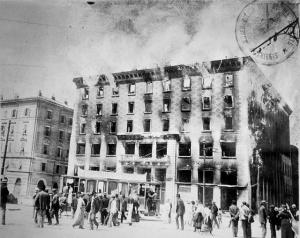
Fascist violence began immediately after the end of the First World War. In 1920, fascists burned down and destroyed the Narodni dom in Trieste (Trst), which was the symbol of Slovenian presence in the city.3 The building, designed by architect Maks Fabiani and opened in 1904, housed a hotel, a café, a theatre hall, a savings bank, a reading room and the headquarters of numerous Slovenian societies.1
The burning was not accidental. It was part of systematic fascist violence that followed the disillusionment after the end of the First World War and the growing fear of Slovenes in Trieste (Trst).
When the Treaty of Rapallo formalised the annexation of the Slovenian Littoral to Italy in November 1920, the burning proved to be merely a prologue — not an epilogue — to what was to come.
The Narodni dom in Trieste (Trst) was burned on 13 July 1920 — a year and a half after the end of the First World War and four months before the signing of the Treaty of Rapallo. The organised attack was led by Francesco Giunta — a Tuscan fascist sent to Trieste (Trst) with the aim of spreading fascism among the population. The burning of the Narodni dom was a turning point in his political career and one of the acts that paved the way for fascism's rise to power. In March 1922, following D'Annunzio's example, he staged a coup in the Free State of Rijeka (Reka) with two thousand followers, which formed the basis for the subsequent official Italian annexation. In October 1922 he led the fascists of the Julian March in the March on Rome — the action by which Mussolini seized power in Italy. Italian fascist movements viewed the Narodni dom as the most important symbol of Slovenian presence in the city, one that had to be destroyed. Italy symbolically returned the building to the Slovenian community in 2020 — one hundred years after the burning; the official handover was signed by President Sergio Mattarella in March 2022.
In response to fascist suppression, the Littoral Slovenes founded the national defence organisation TIGR.3 Four of its members — Ferdo Bidovec, Fran Marušič, Alojz Valenčič and Zvonimir Miloš — were sentenced to death by the Italian Special Tribunal for the Defence of the State (Tribunale Speciale per la Difesa dello Stato) at the first Trieste trial; they were shot in 1930 at Basovizza (Bazovica).35 In Slovenian consciousness they became known as the Basovizza Four.5
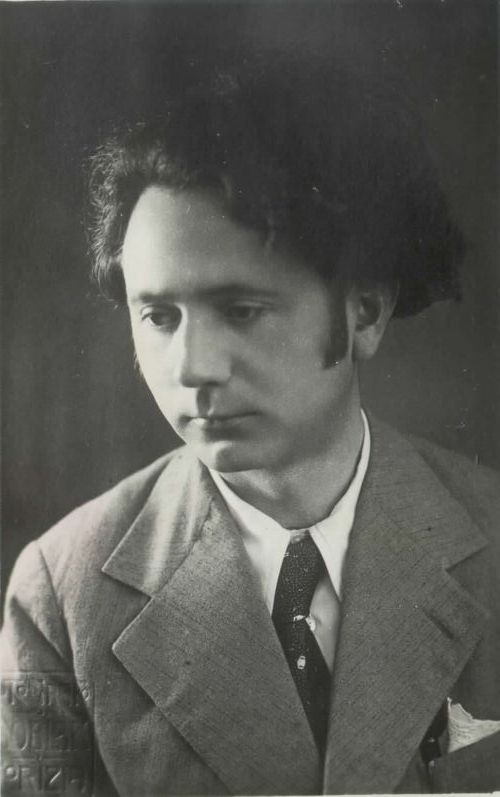
Among the most harrowing stories is the fate of the Gorizia composer and choirmaster Lojze Bratuž. In December 1936, fascists forcibly poured a mixture of engine oil and petrol into his throat. Bratuž, whose only "offence" was that he refused to abandon his language when conducting church choirs, spent weeks dying from the poisoning and died on 16 February 1937, the day before his 35th birthday.3


Individual fates — faces of a policy of suppression
Historical processes become more comprehensible through individual life stories. Below is a selection of Littoral Slovenes whose lives were shaped by the fascist policy of Italianisation.
A Gorizia choirmaster who helped preserve the Slovenian language by conducting church choirs. In December 1936, fascists poured a mixture of petrol and engine oil into his throat; after weeks of suffering he died. He became one of the best-known symbols of fascist violence against Littoral Slovenes.3
Four members of the TIGR organisation who were sentenced to death by the Special Tribunal for the Defence of the State at the first Trieste trial. They were shot at Basovizza (Bazovica) in 1930 and became in Slovenian consciousness a symbol of resistance to fascist suppression.35
On 19 March 1921, fascist squadristi travelling by narrow-gauge railway from Poreč towards Trieste (Trst) fired from the train at a group of children playing by the track near Strunjan. 10-year-old Renato Brajko and 11-year-old Domenico Bartole were killed; Anton Horvatič and Mario Brajko were so severely wounded that they remained disabled for life. Five children were wounded in total. No one was prosecuted, and no investigation was conducted. The crime was committed before fascism officially came to power — and is considered one of the first cases of fascist violence against children in Europe.1
Teachers who taught in Slovenian were deliberately sent deep into the Italian interior by the authorities after the school reform of 1923, to separate them from Slovenian children. A generation of Littoral children thus grew up without schooling in their mother tongue.34
The attack on Yugoslavia and occupation
In 1941, fascist Italy participated in the attack on Yugoslavia. Together with Hitler's Germany, Hungary and the NDH, it dismembered Slovenian national territory into four parts.3 Italy occupied central Slovenia and established the Province of Ljubljana. During the occupation, documented sources record mass arrests, brutal violence against the civilian population and deportations.6
As occupiers, the Italians shot hostages, killed civilians and imprisoned Slovenes in concentration camps.3 Approximately 25,000 to 30,000 Slovenes, mostly civilians, women and children, were deported to Italian concentration camps.36
Concentration camps: Rab, Gonars and others
The best-known Italian concentration camps for Slovenian internees were Rab (Kampor) and Gonars.3 On Rab alone, around 1,200 Slovenes died due to unbearable conditions and disease, among them more than a hundred children.3
It is important to note that some of these camps were not merely a consequence of the war, but were integrated into the broader system of repressive institutions with which the Italian state had already before the war, and then during it, controlled and punished the population. The Gonars camp, for example, officially became a camp for Slovenian civilian internees in 1942, but had previously held Yugoslav prisoners of war.1
The double standard in the portrayal of victims
Every year on 10 February, Italy commemorates the victims of the foibe massacres and the emigration (exodus) of Italians from Istria, Rijeka (Reka) and Dalmatia, while according to journalistic and historical sources it deliberately obscures fascist crimes.3 Italian Law No. 92/2004 established 10 February — the day Italy signed the Paris Peace Treaty in 1947 and lost much of the previously acquired territory — as the Day of Remembrance of the foibe victims and the exodus.7
Historian Eric Gobetti notes that after the war the Italian authorities persistently protected war criminals and that the myth of the "good Italians" as innocent victims became entrenched.8 It is precisely this selective memory — emphasising one's own victims while simultaneously ignoring the crimes that created the conditions for postwar violence — that lies at the heart of the dispute between Slovenian and Italian historical memory.
Impunity of Italian war criminals
More than 1,200 Italian officials and soldiers were suspected of war crimes; documentation on this was gathered after the war and submitted to international authorities. However, no member of the Italian occupation authorities or military was brought to trial for the mass war crimes committed during the occupation in Africa, the Balkans, Slovenia and on the eastern front.9
The formal reason was Italy's switch to the Allied side in 1943, but the actual reason was the fear on the part of the United Kingdom and the United States that disclosing the crimes would excessively strengthen the Italian Communist Party.9 Senior officers such as Mario Roatta, Mario Robotti, Alessandro Pirzio Biroli and others were never convicted; they were saved from extradition by the military-political balance of the Cold War.10
Timeline of key events
Venetian Slovenia joins Italy
After the Austro-Italian War, Austria cedes Venetia to Italy. In the plebiscite, the inhabitants of Venetian Slovenia vote for annexation. Venetian Slovenes become the first group of Slovenes separated from the motherland within Italian borders. Even then it holds that Slovenian is the language of Austrian affiliation, while Italian is the only "appropriate" public language.2
Treaty of London
Italy enters the First World War on the side of the Entente through a secret agreement, in exchange for promised territories at the expense of Austria-Hungary, including a large part of Slovenian national territory.3
Burning of the Narodni dom in Trieste (Trst)
Fascists burn down and destroy the Narodni dom in Trieste (Trst), the symbol of Slovenian presence in the city.3
Treaty of Rapallo
Italy receives approximately one third of Slovenian national territory with a quarter of the Slovenian population, as well as the Croatian part of Istria, Rijeka (Reka) and Zadar. Around 325,000 Slovenes find themselves within Italian borders. A policy of denationalisation, Italianisation and encouraged Italian settlement begins.23
Abolition of Slovenian-language education
The Italian school reform abolishes Slovenian as the language of instruction in all state schools in the annexed territory. Slovenian teachers are deliberately transferred to the interior of Italy.34
First Trieste trial — the Basovizza Four
The Special Tribunal for the Defence of the State sentences four TIGR members to death — Bidovec, Marušič, Valenčič and Miloš — who were shot at Basovizza (Bazovica). They become a symbol of Slovenian anti-fascist resistance.35
Murder of Lojze Bratuž
Fascists pour a mixture of petrol and engine oil into the throat of the Gorizia composer and choirmaster. After weeks of suffering he dies on 16 February 1937.3
Attack on Yugoslavia and occupation
Italy participates in the attack on Yugoslavia and, together with Germany, Hungary and the NDH, dismembers Slovenian territory. It establishes the Province of Ljubljana, where arrests, shooting of hostages and deportations follow.36
Concentration camps Rab and Gonars
Around 25,000–30,000 Slovenes are deported to Italian concentration camps. On Rab alone, around 1,200 people die, among them more than a hundred children.3
Liberation of Trieste (Trst) and the Slovenian Littoral
The 4th Army NALJA and units of the IX Corps liberate Trieste (Trst). For Littoral Slovenes, this is the end of decades of denationalisation and violence.3
Paris Peace Treaty
Italy signs the peace treaty with the Allies and loses much of the territory acquired after the First World War. Slovenia receives a large part of the Slovenian Littoral; part of the Slovenian population remains in Italy as a minority. Italy later designates this very date as the Day of Remembrance of the foibe victims and the exodus.7
Trieste crisis and the Cold War
The Julian March is divided into Zone A (Anglo-American administration, with the city of Trieste) and Zone B (Yugoslav administration). In the atmosphere of the Cold War, the Slovenian minority was treated by numerous political forces and parts of institutions as a potential Yugoslav "Trojan horse", and much of the anti-Slovenian fascist legislation remained in force.15
Treaty of Osimo
Italy and Yugoslavia definitively settle their mutual border with the Treaty of Osimo, which largely follows the 1954 demarcation. The treaty is the legal basis for today's border between Slovenia and Italy.16
Joint historical commission and common report
The governments of both countries establish a joint Slovenian-Italian cultural-historical commission. In 2000 it unanimously adopts the report Slovenian-Italian Relations 1880–1956. Despite the participation of Italian historians, Italian politics never officially endorses it.1314