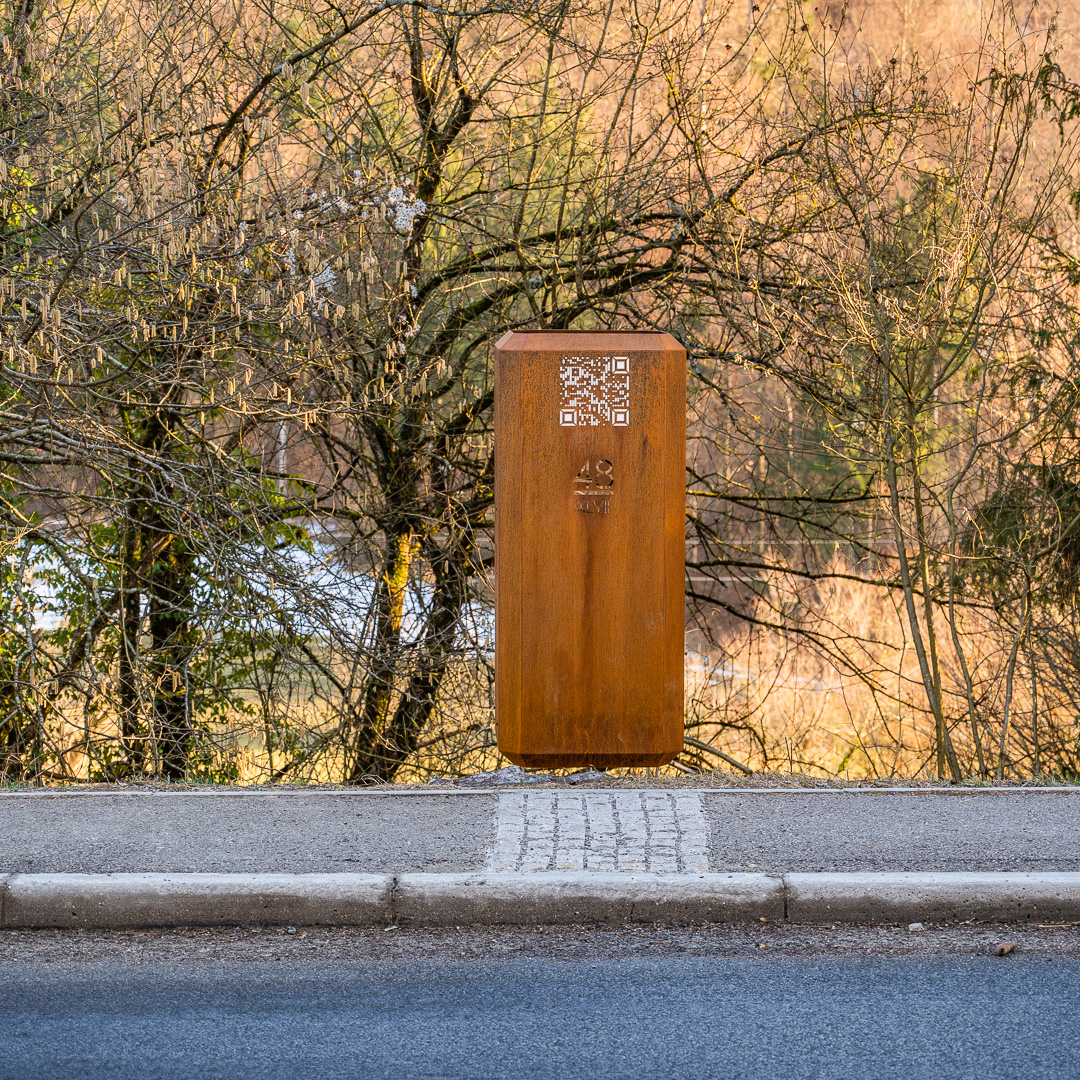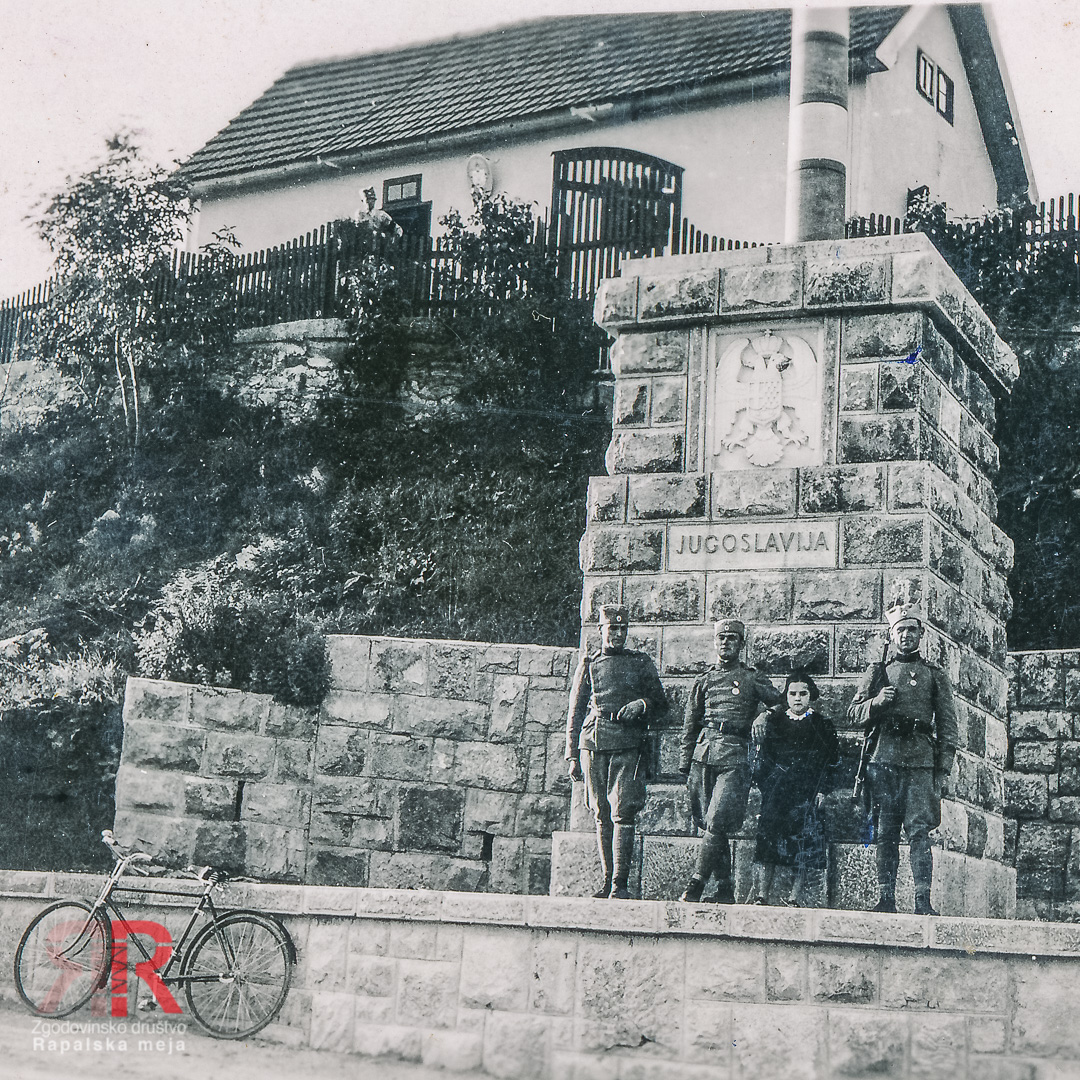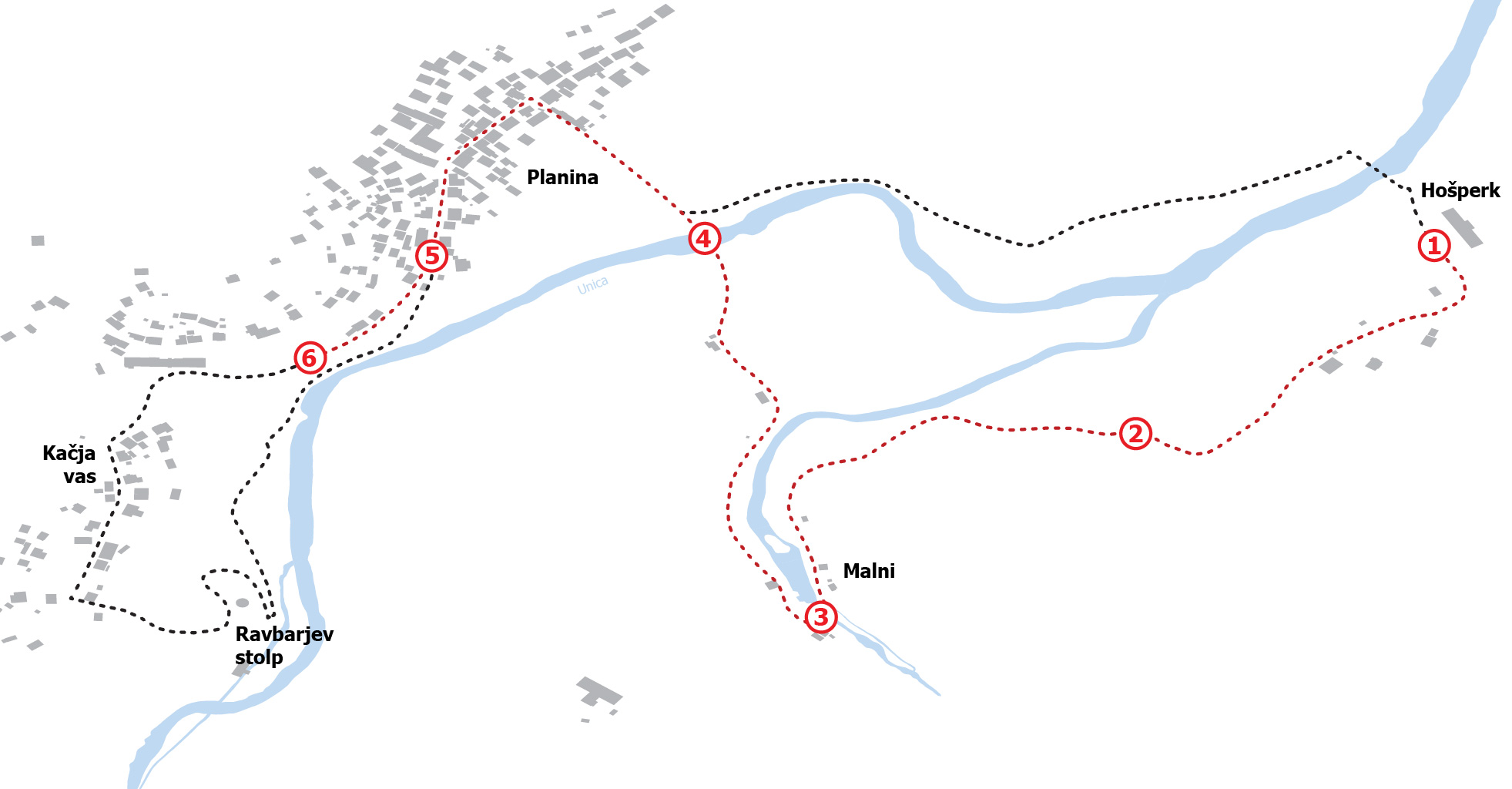
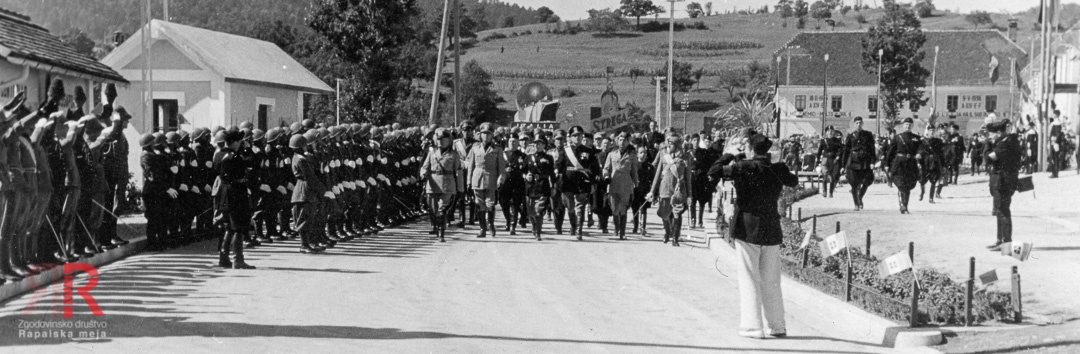
In September 1938, Italian dictator Benito Mussolini visited the area of Planina pri Rakeku, then a border crossing between Italy and Yugoslavia. At the nearby hamlet of Kačja vas, he briefly stepped onto Yugoslav territory and met local authorities, symbolically presenting friendly relations between the two states. The event attracted large crowds and a formal military reception on both sides of the border. At the time, Planina was one of the busiest and most important border crossings in the region. Mussolini even spoke here about cooperation and friendship—just a few years before the outbreak of World War II. Following his visit, a monumental structure was erected at the site, designed by architect Publio Morbiducci. This monument was built as a project funded by Italian war veterans who had settled in Postojna and the surrounding area. With its references to ancient Rome, it symbolically asserted the idea that this was “Italian territory.” Today, only ruins remain on site, while a fragment of the monument is preserved and displayed in the Notranjska Museum in Postojna, offering insight into this historically complex border landscape.
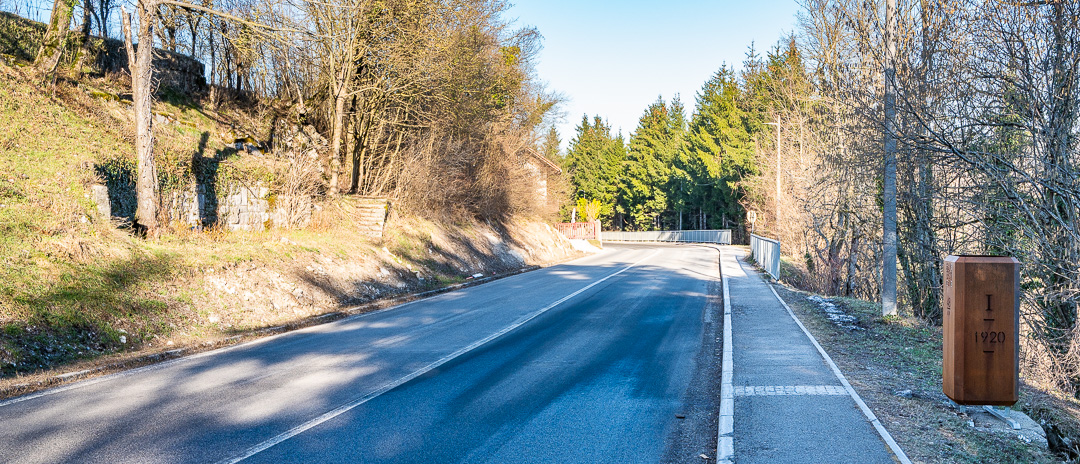
1932 — The commander of the gendarmerie station Planina, Jakob M. Metelko, reported in January about unreliable persons holding border passes. Several residents of Planina and Grčarevec had their border passes revoked because they had reportedly been seen socialising in inns with Italian financiers.