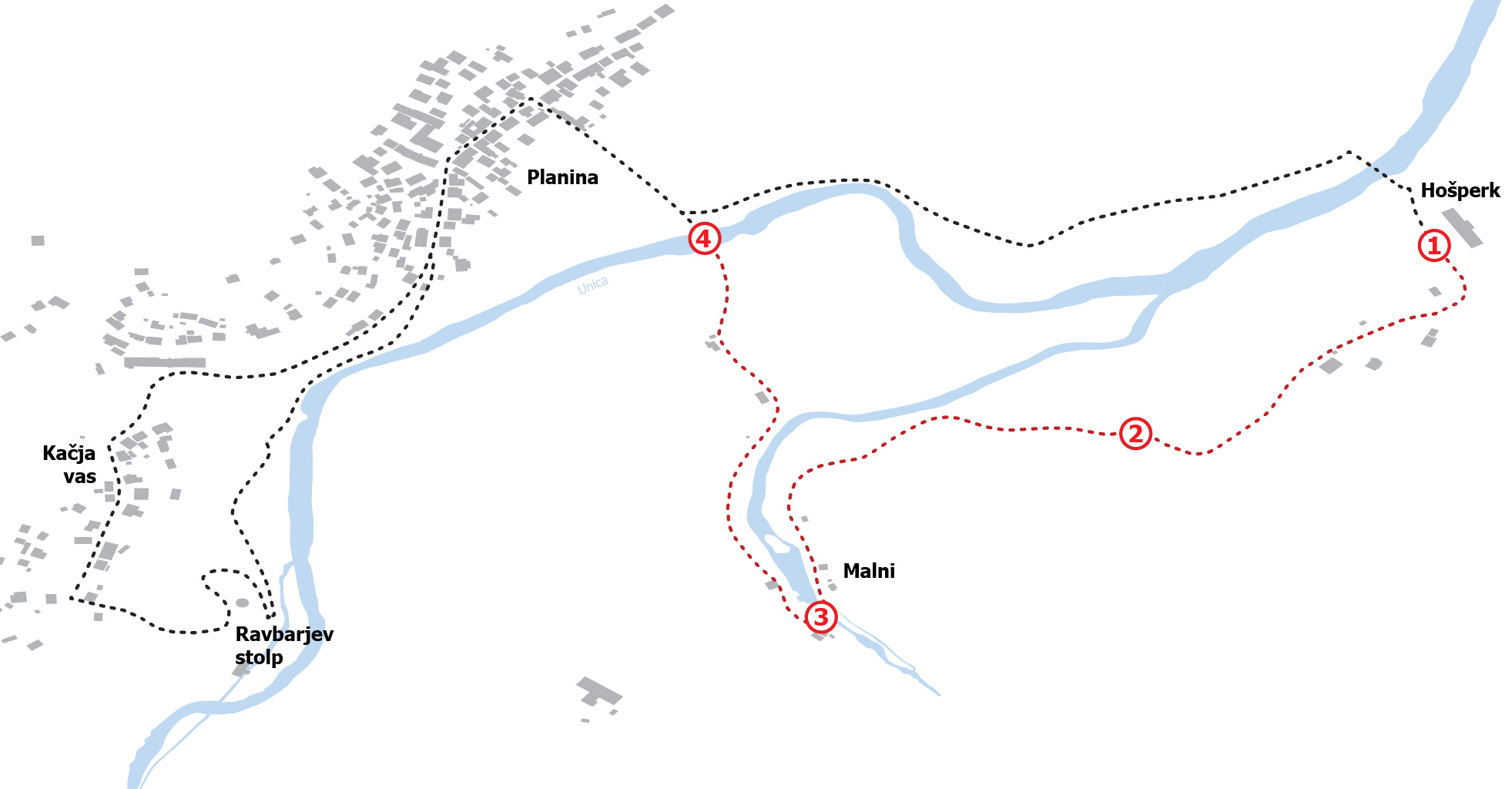
With the final agreed course of the border in 1924, Planina became the only larger settlement in today's Slovenia in which the border ran through the settlement itself — Gornja Planina was thus separated from Kačja vas and Grič. The division of the place called for many adjustments, both from the inhabitants and from the authorities: the children who, with the new division, became citizens of the Kingdom of Italy attended classes on the side of the Kingdom of SHS until 1931, when an Italian school was opened in Kačja vas.
All three churches and the cemetery were also on the Yugoslav side. The inhabitants on the Italian side therefore attended church services at the only sacred building available to them — the chapel of the Hošperk manor. They did not go there by the shortest route, but along the small road above the Planinska jama — the only road that did not lead to the manor across the state border.
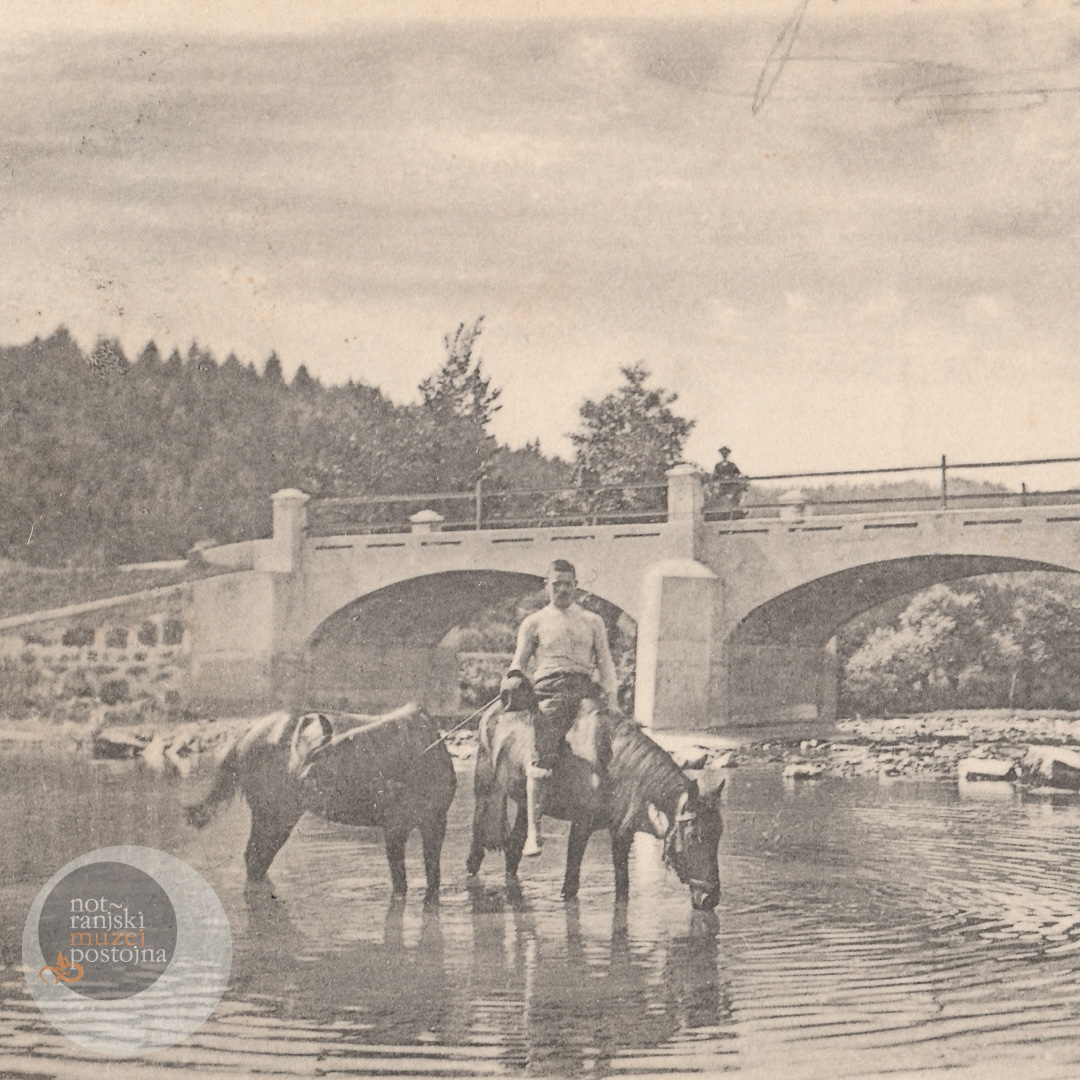
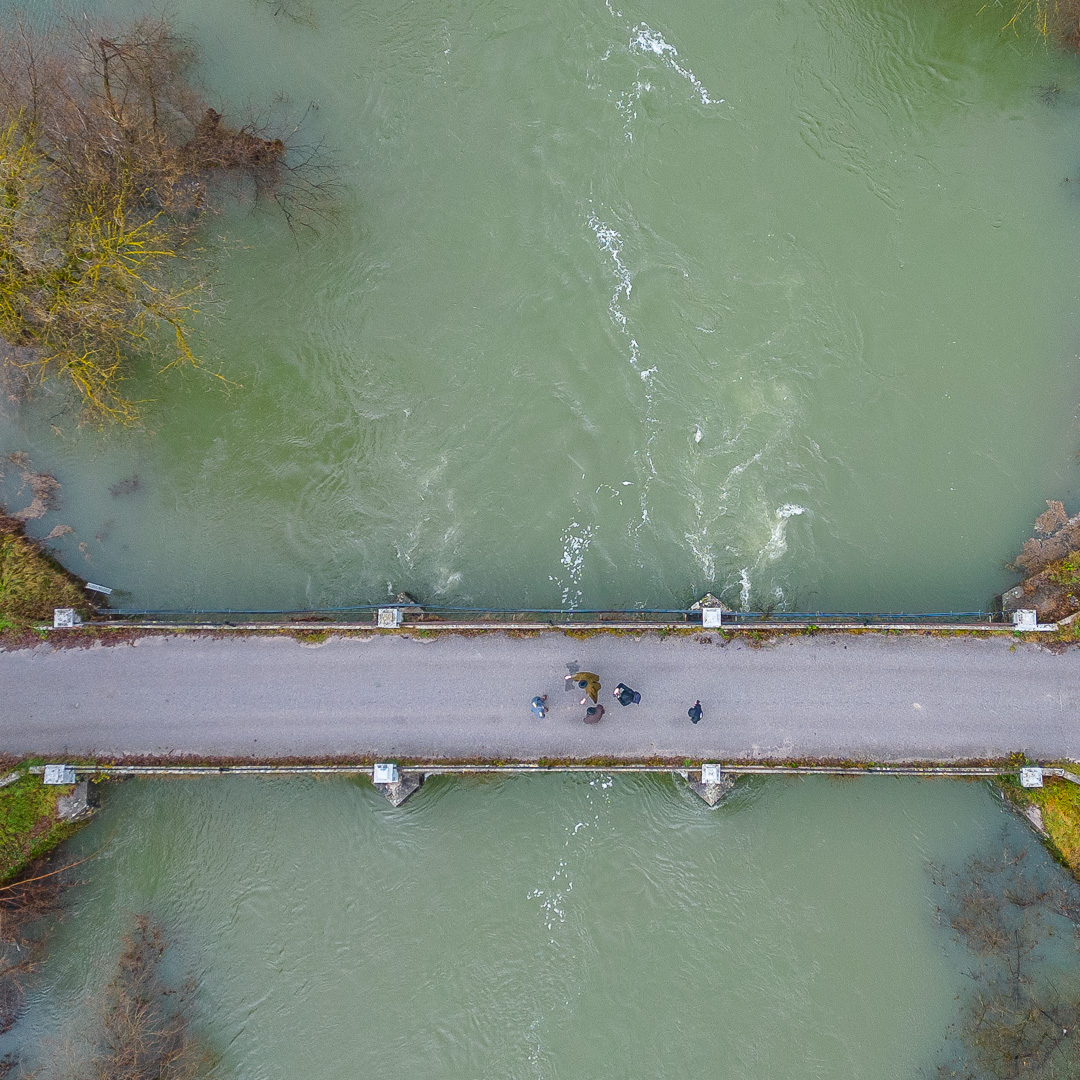
1930 — In February, when financial-control sub-inspector Franc Jančar was on duty in bad weather at the guardhouse beside Malni, two Italian citizens from the area of Bologna appeared at the border crossing. Not understanding Italian, he used a local from Planina, Marija Rožanc, as an interpreter, and led the refugees to the gendarmerie post for further questioning. The very next day Marija Rožanc reported to the Italian carabinieri that the refugees had admitted to taking part in the attack on the editorial office of the newspaper Il Popolo in Trst, and that Franc Jančar was said to have welcomed their action and added that an attempt on the life of Benito Mussolini, the head of the Italian government, was also called for.
Fearing an international incident, the Banska uprava in Ljubljana reported to the state-security department of the Interior Ministry and asked the Drava financial directorate to conduct additional investigations. The district head of Gorenji Logatec officially questioned Franc Jančar and Marija Rožanc on 1 March, and each of them presented a different story. Four days later, the chief of the main financiers' section in Gorenji Logatec, Alojzij Črepinek, also questioned both, accompanied by the chief of the Planina section with two financiers, who kept the record. The Občina Planina pri Rakeku was also asked for its opinion of Marija Rožanc, and she was declared '…in political and moral terms in poor standing and, in the opinion of the municipality, unreliable, as well as rather of limited intellect.'
Owing to the lack of clarity, Franc Jančar had his salary reduced by 15% for three months for procedural errors and his promotion was frozen for one year. He had, in this small guardhouse, brought in both Italians and questioned them unjustifiably about the incident in Trst, and the use of a local woman as an interpreter was also problematic — protocol required that the refugees be handed over to the gendarmes immediately.